
The Spirit of the Thai Cat: History, Intuition, and the Invisible Bond
There is something about Thai cats that defies simple explanation.
Long before I began formal preservation work, before accreditation, before structured breeding plans — I felt it. A presence. A kind of attentiveness that was almost human, and yet somehow older.
Thai cats do not simply live beside us. They seem to study us.
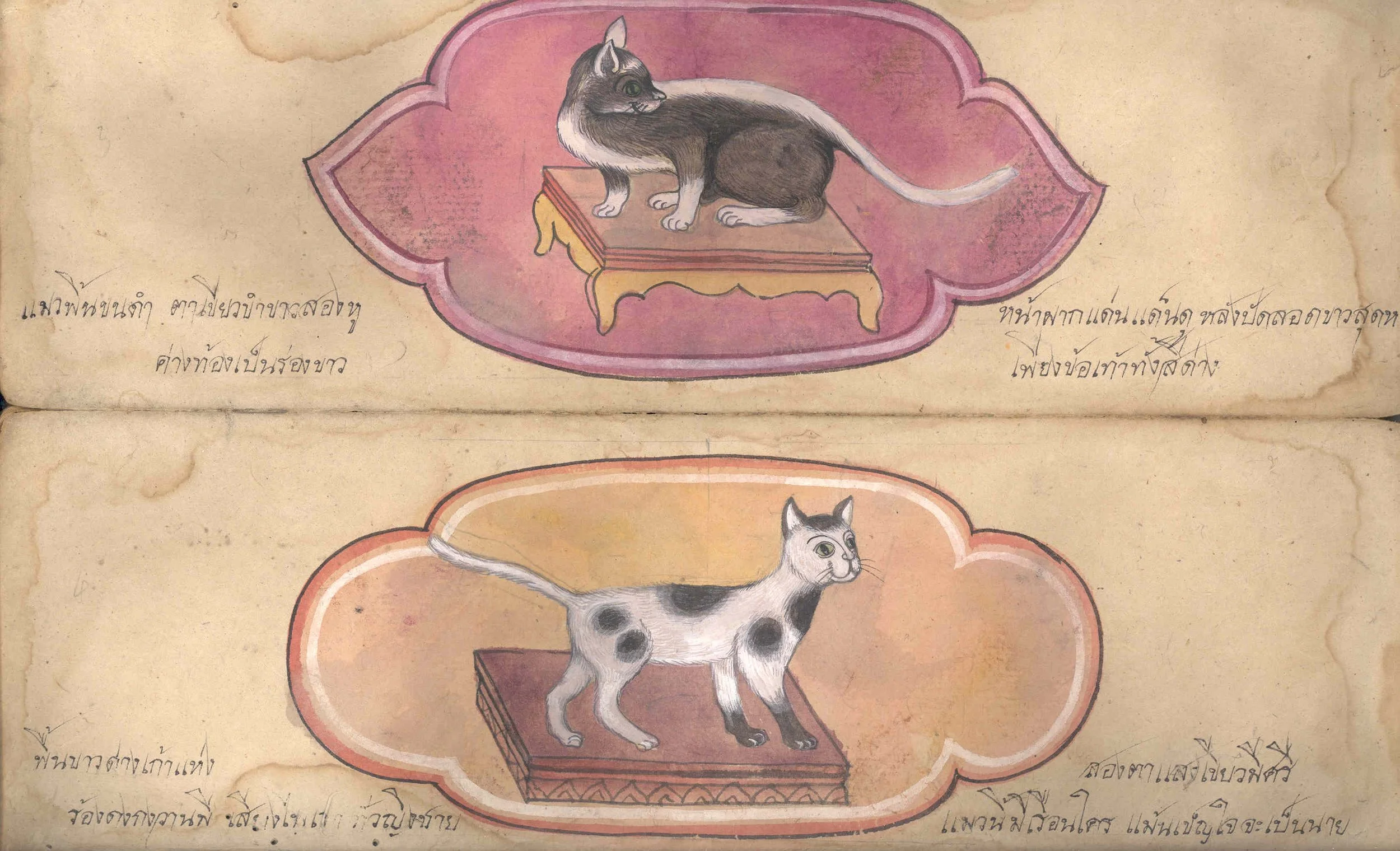
Centuries ago, the cats of Siam were carefully recorded in the ancient manuscript known as the Tamra Maew — often translated as The Cat-Book Poems. These texts described certain cats as bringers of fortune, protection, and harmony. They were not categorized casually. They were named, honored, and remembered.
In Thailand, cats were not merely pets.
They were symbols. Companions. Guardians.
When I first began studying these breeds seriously, I was drawn in by their documented history. But what has kept me devoted is something more difficult to quantify.
Thai cats seem to understand emotional undercurrents.
They appear before tears fall.
They settle into silence when words fail.
They maintain eye contact in a way that feels deliberate — almost assessing.
Anyone who has lived closely with a Wichienmaat, Korat, Suphalak, Konja, or Khao Manee knows this quiet intelligence. It is not performative. It is not frantic. It is steady. Observant. And it feels ancient.
I do not claim mysticism in a theatrical sense. But I do believe these cats carry a depth shaped by centuries of human reverence. When animals are valued, protected, and woven into cultural identity over generations, something endures in them.
In Thailand, certain native breeds were believed to bring prosperity or safeguard households. Whether one interprets that symbolically or spiritually, the underlying truth remains: These cats have always been seen as more than ornamental.
What moves me most is how they bring people together. Families bond over them. Strangers connect because of them. Conversations deepen around them. There is a softness that enters a room when a Thai cat chooses to sit between people.
As preservationists, we speak often about genetics, lineage, and documentation — and rightly so. Authenticity matters. Health matters. Cultural accuracy matters. But preservation is not only structural. It is relational. When we protect these breeds, we are protecting not just their form, but the experience they create in human lives — the attentiveness, the emotional mirroring, the sense of being quietly understood.
I have watched these cats comfort children without being prompted.
I have watched them rest beside illness without agitation.
I have watched them form bonds that feel almost intentional.
Are they wiser than we expect? Perhaps. Or perhaps we have underestimated the depth of animals who have shared human spaces for centuries with such closeness.
What I know with certainty is this: Thai cats are not interchangeable with trends. They are not aesthetic statements. They are living threads of cultural memory. And when entrusted to the right stewards, they continue doing what they have done for generations — bringing steadiness, connection, and something quietly sacred into the home.
Preservation, to me, is not only about protecting the body of the breed. It is about protecting the spirit of it.
And that is work I will always approach with reverence.